
Tritiated Waste Treatment System | Waste Treatment | Chengdu South Electronic Instrument
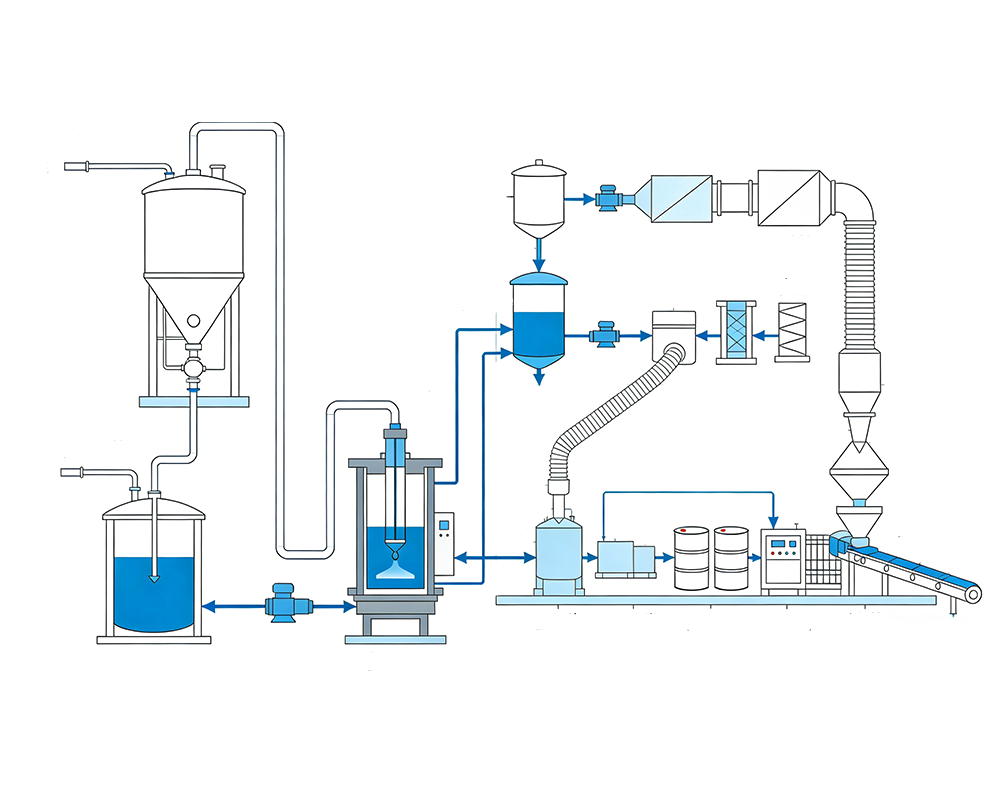
[Application] The tritiated waste treatment system is used for receiving, storing and treating tritiated spent resin and tritiated wastewater. The main equipment includes tritiated wastewater storage tanks, tritiated spent resin tanks and wastewater transfer pumps. The cement solidification subsystem uses dedicated cement solidification equipment.
[Purpose] The system helps balance technical feasibility, economy and environmental safety in tritiated waste treatment, while reducing radiation-safety risks for operating personnel.
[Implementation] Tritiated spent resin is flushed through pipelines into the tritiated spent resin tank. To prevent resin blockage, the transfer flow velocity should not be lower than the specified 2-1.4 m/s range. A sight glass and camera are installed at the tank inlet so operators can observe the resin transfer process and confirm that the spent resin has been fully transferred.
Resin flushing water first enters the tritiated spent resin tank. After the tank is filled, excess flushing water is filtered through a 150-mesh screen inside the tank and discharged to the tritiated wastewater storage tank. Tritiated wastewater stored in the tank can be transferred by the wastewater transfer pump to the wastewater metering tank of the cement solidification unit for solidification. It can also be reused as transfer water to flush spent resin from the tritiated spent resin tank to the spent resin metering tank of the cement solidification unit.
The cement solidification subsystem solidifies tritiated spent resin and tritiated wastewater. Its main equipment includes spent resin metering tanks, wastewater metering tanks, drain pumps, cement bag-opening equipment, additive bag-opening equipment, screw conveyors, filling stations, mixing stations, cleaning stations, liquid collection trays, capping devices, solidification drum lifting devices, roller conveyors and ventilation hoods.
The subsystem functions include cement and additive unpacking and metering, spent resin and wastewater metering, automatic opening and capping of 50 L and 100 L drums, solidification filling and mixing for spent resin and wastewater, and cleaning of the mixing paddles.
The main process is as follows: spent resin in the tritiated spent resin tank is flushed by the wastewater transfer pump to the spent resin metering tank, where weighing elements measure the resin weight. Tritiated wastewater is transferred from the wastewater storage tank to the wastewater metering tank, where weighing elements measure the wastewater weight. After metering, spent resin or tritiated wastewater is gravity-fed through piping to the solidification filling station.
Empty 50 L steel drums or 100 L steel drums are moved to the roller conveyor of the solidification unit in the tritiated waste treatment area. The capping device opens the drums, which are then transferred to the filling station for spent resin or tritiated wastewater filling. After filling, the drums are moved to the mixing station, where double-helical paddles complete the solidification mixing process. After mixing, the capping device automatically closes the drums, which are then transferred to the designated curing and storage area.
[Advantages] The system accurately measures the weight of spent resin and tritiated wastewater, providing reliable data for downstream solidification and helping reduce energy consumption. Multi-station coordination improves treatment efficiency, reduces manual intervention, significantly lowers personnel radiation exposure risk and supports safer operation.